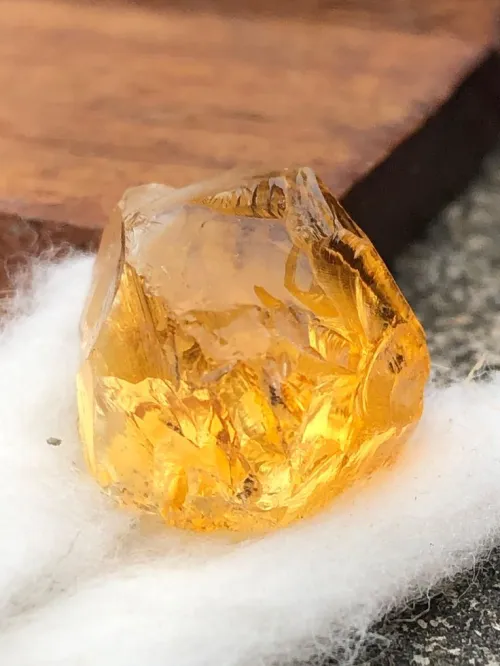
You're scrolling through birthstone charts or browsing online jewelry listings when citrine catches your eye—vibrant yellow hues glowing like captured sunlight. For Aquarians exploring this stone, a dozen practical questions follow: Does it clash with my sign? How should I wear it? Why do some pieces look faintly orange? Will it scratch easily during daily use? Unlike mystical claims often attached to gems, we're sticking to observable facts: mineral properties, material science, and real-world wearability. By examining gem composition, color development physics, and durability data—not planetary alignments—we'll clarify how aquarians can incorporate citrine into their jewelry rotation confidently.
1. How does citrine interact with Aquarius traits from a practical perspective?
2. What physical mechanisms influence citrine's golden coloration?
3. What jewelry placements enhance citrine's visibility and longevity?
4. How does citrine perform during daily routines like typing or exercising?
5. Which visual characteristics distinguish natural citrine from treated alternatives?
6. What common misconceptions exist about citrine's properties?
Citrine poses no inherent compatibility restrictions for Aquarius wearers—its warm yellow tones function as a versatile neutral accent regardless of birth month. Color saturation preferences and lifestyle habits matter more than zodiac signs when choosing jewelry.
The gem's 7 rating on the Mohs hardness scale offers suitable scratch resistance for everyday accessories. Crucially, citrine's hexagonal molecular structure allows faceted cuts to refract artificial light differently than daylight—in office settings, facets throw sharper sparkle patterns than under diffuse natural light. When choosing stones, assess face-up visibility under your typical lighting environments rather than mystical properties. Some prefer deeper amber stones for visibility in dim restaurants, while pale yellows shine brighter against daylight windows. Since prolonged sunlight exposure may fade intensely heat-treated stones over years, consider a secondary jewelry rotation if you're frequently outdoors.
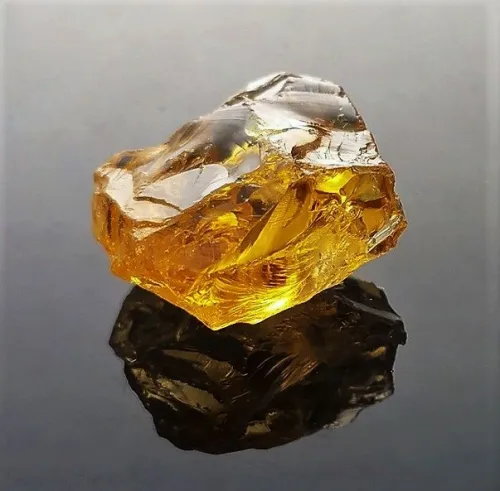
The perceived connection between citrine and Aquarius arises from the stone's visual warmth against winter births, not molecular properties. Material science explains citrine's characteristics through verifiable geology rather than cosmic alignment.
Natural citrine's color variations—from buttery yellows to rich amber tones—result from iron ion inclusions during formation. Iron concentration levels determine intensity, while cut orientation affects perceived saturation. Under magnification, unheated specimens may display subtle color zoning patterns invisible to your eye. The stone maintains thermal stability, meaning skin temperature or moderate weather shifts won't alter its structure. Crucially, citrine won't "respond" to zodiac signs; its physical properties remain consistent across wearers. When comparing stones, observe how carat weight distribution affects color richness—larger stepped cuts can look paler than clustered small stones of equal weight.
Sustained crystal brilliance requires mindful placement: rings and pendants experience less abrasion than bracelets during daily tasks like typing or bag handling.
A typical citrine ranks 7 on the Mohs hardness scale—scratch-resistant but not indestructible during physical activities. Settings with full bezels or protective prongs shield stone edges from chips when you accidentally bump surfaces. Note that daily micro-abrasions can develop faint matte patches on high-contact zones like ring bands after 2-3 years; this won't change how the crystal refracts light when viewed face-up. Regarding cleaning, use lukewarm water (below 60°C/140° F) since extreme temperature shifts may stress any microscopic fractures. Jewelry with electroplated companions tends to show accelerated wear at direct contact points—inspect prongs annually during professional polishing to restore optical clarity. Thermal expansion considerations apply for custom sizing metal components.
Long-term wear testing reveals how citrine performs across settings: office lighting emphasizes brilliance differently than daylight, while different chain materials affect skin contact comfort.
Faceted citrine maximizes indoor sparkle—its angled planes amplify refraction under LEDs or spotlights. Round brilliant cuts project more dispersed sparkle patterns than emerald cuts in low-light environments like restaurants. For metal pairings, citrine tones complement both silver and gold neutrally but test thickness if pairing with thick chains that may scratch lower girdles. Notice how indirect sunlight might reveal secondary hues invisible under store lighting—a stone looking pure yellow indoors can show faint peach undertones on cloudy days. When wearing daily pieces, prolonged skin contact won't alter chemical properties but perspiration residues dull surfaces quicker than occasional-wear items. For longevity, prioritize designs enabling surface cleaning access.
Authentic identification combines observable traits and provenance verification—not metaphysical "sensing." Natural citrine frequently displays identifiable optical signatures absent in heat-treated alternatives.
Under magnification, authentic citrine often features irregular liquid/gas deposits whereas hydrothermal alternatives can show distinct seed crystal outlines.
Several persistent myths distort practical citrine knowledge—most notably color stability claims and hardness misconceptions that impact jewelry care decisions.
Contrary to popular depictions, citrine does not magically attract abundance or require "charging" rituals—it's silicon dioxide colored by natural iron impurities. Heat-related fading remains the most misrepresented aspect: modern citrine jewelry with natural stones or high-quality lab equivalents holds stable color for decades with proper care. Only intensely heated counterfeit stones exhibit accelerated fading under daily sun exposure. Hardness confusion also persists—a Mohs 7 rating doesn't guarantee toughness against impact. Sharp blows that might barely scratch sapphire (Mohs 9) can fracture citrine due to its crystalline cleavage planes. Finally, citrine doesn't develop "vibrational bonds" with wearers; any perceived affinity stems from subjective responses to its vibrant color psychology.
When evaluating citrine options, focus on three verifiable aspects: Assess visible sparkle patterns under your typical lighting instead of mystical properties; verify durability precautions for your activities by prioritizing protective settings; compare secondary color tones between artificial and natural light to avoid surprises. Remember, citrine jewelry succeeds by complementing—not dictating—your personal style and functional needs.


$
