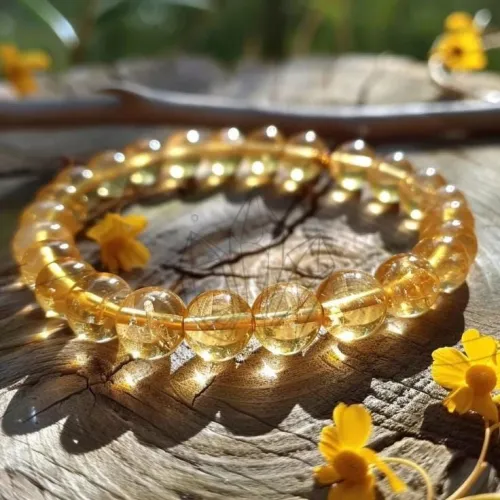
You've probably held a beautiful citrine piece that came loose from a pendant or decorative item, wondering if reapplying glue might risk damaging the stone. It's that moment when admiring golden quartz turns into frustration over delicate bonds. Beyond the core question, crafters often grapple with adhesive choices for different bases, signs of improper attachment, and long-term preservation techniques. We'll address these practical concerns while exploring the science behind reliable bonding.
1. What core methods ensure citrine stays safely attached?
2. How does citrine's structure affect its bonding vulnerability?
3. Which adhesives work best for specific ornament materials?
4. What's the correct step-by-step application process?
5. How do you recognize properly secured citrine versus risky attachment?
6. What real-world insights improve attachment success?
7. How can you preserve citrine ornaments long-term?
Mechanical settings or specialized jewelry adhesives provide the safest hold for citrine. The method choice depends on ornament design and citrine size – prong settings physically cradle stones, while UV-cured resins create invisible bonds. Both require understanding citrine's cleavage planes to avoid pressure points.
Surface preparation quality profoundly influences bond strength. For adhesives, cleaning both citrine and base with isopropyl alcohol removes oils that weaken adhesion. Citrine's crystalline structure demands adhesives that won't chemically degrade it over time. Epoxies designed for quartz-based gems maintain flexibility after curing, which may help absorb minor impacts that could otherwise fracture crystals. Avoid cyanoacrylates which can leave white residue.
Citrine fractures easily along cleavage planes and has moderate thermal sensitivity. These traits dictate bonding protocols – avoid temperature shock during adhesive curing and distribute pressure evenly.
Physical stress concentrations may develop where adhesive thickness varies. Temperature variations can cause base materials (like wood or metal) to expand/contract at different rates than citrine, stressing bonds. Humidity levels during curing impact setting time for moisture-cured adhesives – high humidity may cause clouding. Different ornament types need specific bonding approaches; metal conducts heat away faster during curing than wood, potentially requiring longer clamp times. Chemical properties must align, as acidic adhesives might etch citrine surfaces over years.
Match adhesives to your base material while ensuring citrine compatibility. Metals require different formulations than porous materials.
For metal bases like sterling silver or pewter, two-part epoxy provides superior shear strength and heat resistance. Wood and resin bases typically need flexible adhesives like polyurethane-based varieties that accommodate material movement. Avoid solvent-based glues on plastics, which may craze surfaces or create stress cracks near bond lines. Adhesive viscosity impacts application – thicker gels prevent messy overflow under faceted citrine. Light exposure matters too: UV-cured resins allow precise positioning but require application in low-light conditions before full cure.
Consistent results require meticulous surface prep, measured adhesive application, controlled curing, and stress testing. Rushing any step risks failure.
Start by degreasing surfaces – even fingerprints compromise bonds. Apply adhesives in dots or thin layers; excessive amounts may extend cure time and create messy squeeze-out. Temperature variations can accelerate or delay curing – check product specs for ideal ranges. Humidity levels influence moisture-activated adhesives significantly. Position citrine gently but firmly, applying vertical pressure without lateral shifts. Use wax or painter's tape as masking around contact points to contain overflow. Curing times vary from minutes (UV resins) to hours (epoxies) – maintain stable conditions throughout.
A well-attached citrine shows uniform light transmission around edges and withstands gentle stress tests. Bond line visibility often reveals quality.
Visual clues indicating secure adhesion include consistent, transparent outlines without gaps or fogging. After prolonged use, securely bonded citrine maintains positional alignment without rotation or "rocking." Regular inspection helps identify early issues like subtle halo effects suggesting adhesive separation. Environmental factors impact visibility – dust accumulation near edges isn't detachment but requires cleaning. Adhesive transparency tends to shift slowly with age; slight ambering doesn't necessarily mean failure if integrity remains. Wear patterns matter – localized adhesive wear typically happens around contact points during physical stress if bonding was uneven.
Experienced crafters recommend testing adhesives on scrap materials first and noting environmental factors affecting specific formulas.
User testimony consistently shows that thorough surface prep reduces detachment incidents. Online product images may underrepresent true adhesive viscosity – thicker formulas often control overflow better for small citrine pieces. Humidity plays a bigger role than many anticipate; moisture-curing adhesives may fail in arid environments. Temperature-resistant formulas maintain flexibility during seasonal shifts. Properly applied adhesives greatly reduce risks from routine handling impacts. Environmental factors like coastal salt air may necessitate more frequent inspections.
Preserving bond integrity requires gentle cleaning, environmental awareness, and periodic professional assessment for valuable pieces.
Long-term maintenance involves avoiding ultrasonic cleaners that vibrate bonds, and chemical cleaners that could degrade adhesives. Use soft brushes and mild neutral pH solutions. Extreme temperatures should be avoided during cleaning and storage – both citrine and adhesive expand/contract differentially. Physical stress points appear where ornaments experience friction (like pendant backs rubbing against clothing). Securely attached citrine typically shows uniform wear patterns rather than sudden failure. Periodic light testing can check bonds without damaging them: hold ornament base firmly and brush citrine with soft makeup brush – any rocking motion warrants professional reassessment.
If you remember just one thing from this guide: Test your adhesive on scrap material first. Citrine bonding often fails due to improper preparation or material mismatch, not weak adhesives. When evaluating your next project, prioritize these steps: 1) thoroughly clean bonding surfaces, 2) select adhesives based on both citrine properties and base material, and 3) verify curing conditions match product requirements. Ultimately, the most secure attachments consider long-term environmental exposures from the outset.
Q: Can household super glue work temporarily?
A: While fast-setting cyanoacrylates might seem handy, they can create brittle bonds that fracture citrine under stress and frequently yellow or cloud crystal surfaces over time.
Q: How soon can I handle an ornament after gluing?
A: Full bond strength typically develops 24-72 hours after application, even if surface curing occurs faster. Avoid stress tests during this period – adhesives may appear set while still achieving full strength.
Q: Will bonded citrine withstand water exposure?
A: Some industrial epoxies offer waterproof bonds, but prolonged submersion and rapid temperature shifts during wet/dry cycles may compromise most adhesives eventually.


$
